
Urban planning concepts: learn with short audio lessons
Urban planning concepts can feel abstract on a page. Listen instead: short, guided audio shows make the ideas concrete while you commute, walk, or relax.
NextListen turns any topic — or a PDF like “what is urban planning” — into a calm, two‑host podcast course you can personalize and start in about two minutes.
- Free to try
- Ready in ~2 minutes
- Personalized to you
Start listening
 6 EP
6 EP 3 EP
3 EP 5 EP
5 EPInside “The Hidden Systems Behind Everyday Life”
- After You Flush4 min
Follow one flush through the tank, bowl, valves and sewer to see how waste moves away.
- How Your Card Reaches the Store4 min
Trace the secure path from your card tap to the bank that authorizes payment.
- How Groceries Cross a Continent4 min
Follow one crate from farm or factory through transport, warehousing and the store shelf.
- Keeping the Grid Balanced4 min
Hear how operators and systems match generation to the changing demand that keeps lights on.
- How GPS Finds You4 min
A clear path from satellite signals to your phone’s pinpointed location.
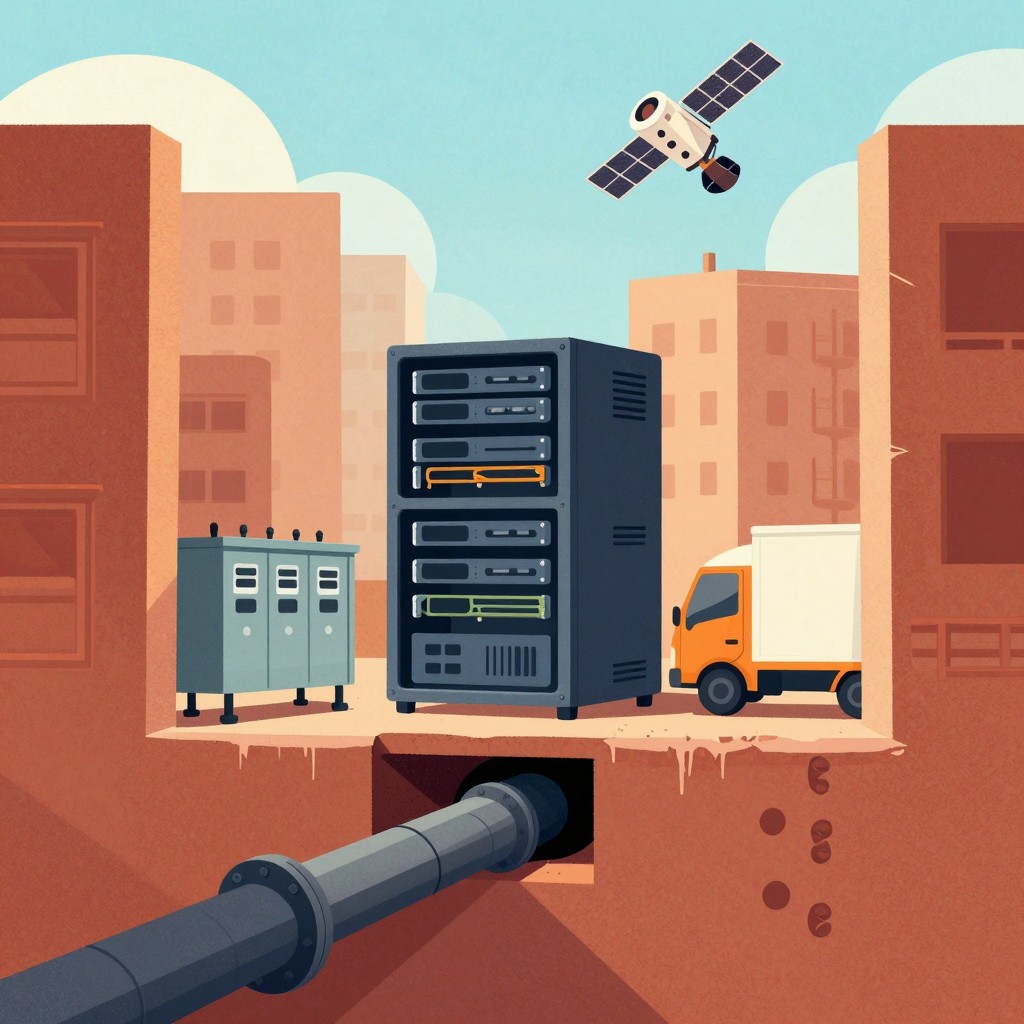
- Where the Internet Actually Lives4 min
Go inside data centers, CDNs and undersea cables to see where your web requests go.
Why audio helps you learn planning ideas
Hearing concepts explained conversationally — with two real‑sounding hosts — makes spatial ideas, tradeoffs, and examples easier to remember than dense text. Audio is especially useful for system thinking: you can follow a project’s timeline, stakeholders, and impacts while doing something else.
Real quick shows you can start with
Try short, focused NextListen shows to get the essentials: “The Hidden Systems Behind Everyday Life” explores unseen infrastructure, “Money Map in 6 Minutes” covers funding and budgets, and “How the Internet Actually Works” models clear, nontechnical explainers you’ll find helpful for planning topics. Each show is structured so you can binge a concept across a few episodes or listen one piece at a time.
Turn your PDFs and questions into a custom course
Upload a PDF like “what is urban planning,” pick tone and episode length, and NextListen creates a multi‑episode podcast with two hosts and optional personalization (examples, local context, or a bedtime‑story framing). Shows are free to try, require no app install, and are generated in about two minutes.
A taste of the audio
From “After You Flush”:
MayaEvery time you flush, a little indoor waterfall appears, does a magic trick, and vanishes into the floor. Which, honestly, is pretty satisfying when you stop to think about it.
SilasOr unsettling, depending on how much you enjoy wondering where things go after they disappear into a porcelain hole.
MayaFair. This is After You Flush, and today we’re following one very ordinary action, from your hand on the handle to, well, the underground world beneath your house.
SilasNo grand tour of all plumbing everywhere. Just one flush. Tiny journey, big consequences.
MayaSo, you press the handle. Inside the tank, that handle lifts a little chain, which pulls open a rubber flap called the flapper.
SilasA name that sounds like it should belong to a tired cartoon bird.
MayaIt does. But this flapper is basically a plug in the bottom of the tank. When it lifts, tank water rushes into the bowl.
SilasAnd that water isn’t just rinsing things downward. It’s doing the heavy lifting.
MayaExactly. The rush creates a siphon, sort of like when you start a drink through a straw and gravity takes over. The bowl pulls its contents through the curved passageway underneath, called the trapway.
SilasThat bend is important, right? It keeps a little water in the bowl afterward, which helps block sewer gases from coming back up into your bathroom.
MayaYes, your toilet is quietly maintaining a water seal. Very polite of it.
SilasUntil somebody flushes something that isn’t meant to go there.
MayaYep. Toilet paper is designed to break down. Wipes, even ones labeled flushable, and other non-biodegradable stuff can snag in pipes and create blockages. A flush is not a trapdoor to another dimension, sadly.
Questions, answered
Can NextListen accurately summarize a technical PDF about planning?
Yes — it extracts key sections and turns them into clear, conversational episodes, but you should check technical details against original sources for professional use.
How personalized can a show be?
You can request local examples, preferred episode length, and a casual or formal host tone to make the course match your needs.
Do I need to install an app?
No — shows play in your browser, and you can try creating a podcast at no cost before committing to anything.
How long does it take to create a show from my PDF?
Most shows are generated in about two minutes, after which you can preview, edit prompts, or adjust personalization.
Want this made just for you?
Tell NextListen exactly what you’re curious about — the angle, the depth, even the vibe of the hosts — and it builds your show while you pour a coffee.