 6 EP
6 EPEpisodes
Transcript
Episode 1 · After You Flush
Maya: Every time you flush, a little indoor waterfall appears, does a magic trick, and vanishes into the floor. Which, honestly, is pretty satisfying when you stop to think about it. Silas: Or unsettling, depending on how much you enjoy wondering where things go after they disappear into a porcelain hole. Maya: Fair. This is After You Flush, and today we’re following one very ordinary action, from your hand on the handle to, well, the underground world beneath your house. Silas: No grand tour of all plumbing everywhere. Just one flush. Tiny journey, big consequences. Maya: So, you press the handle. Inside the tank, that handle lifts a little chain, which pulls open a rubber flap called the flapper. Silas: A name that sounds like it should belong to a tired cartoon bird. Maya: It does. But this flapper is basically a plug in the bottom of the tank. When it lifts, tank water rushes into the bowl. Silas: And that water isn’t just rinsing things downward. It’s doing the heavy lifting. Maya: Exactly. The rush creates a siphon, sort of like when you start a drink through a straw and gravity takes over. The bowl pulls its contents through the curved passageway underneath, called the trapway. Silas: That bend is important, right? It keeps a little water in the bowl afterward, which helps block sewer gases from coming back up into your bathroom. Maya: Yes, your toilet is quietly maintaining a water seal. Very polite of it. Silas: Until somebody flushes something that isn’t meant to go there. Maya: Yep. Toilet paper is designed to break down. Wipes, even ones labeled flushable, and other non-biodegradable stuff can snag in pipes and create blockages. A flush is not a trapdoor to another dimension, sadly. Silas: It is, at best, a very demanding delivery system. Maya: Once everything clears the trapway, it enters your home’s sewer pipe and joins bigger underground pipes headed toward a treatment facility. Silas: And meanwhile, upstairs, the toilet is already resetting itself. Maya: Right. As the tank empties, a float drops and opens the fill valve. Fresh water refills the tank until the float rises and shuts it off. If the flapper sticks open, or the tank refills slowly, you may not get enough water or enough timing for a strong siphon. That’s when you get the weak, disappointing flush. Silas: The toilet equivalent of trying to shove a suitcase under a bed with one finger. Maya: At the treatment facility, the wastewater gets screened for debris, solids settle out, and microorganisms, with oxygen, help clean what’s left. Then it’s filtered and disinfected before being released or reused. The separated sludge is processed on its own path. Silas: So that one handle press starts a carefully timed chain of valves, water, gravity, pipes, and microscopic workers. Maya: A whole hidden system, right under your feet. Next time, we’ll open up another everyday machine.
Episode 2 · How Your Card Reaches the Store
Maya: You know that tiny coffee-shop moment... you tap your card, the machine chirps, and suddenly your latte is yours. It feels almost rude how fast it is. Silas: Right. Like the card reader has personally approved your caffeine budget. Maya: Exactly. But that little tap sets off a quick relay race. Let’s freeze the scene: you’re the cardholder, buying coffee from the merchant. Silas: And the terminal is the first runner? Maya: Yep. You tap, insert, or swipe. The point-of-sale terminal captures the card information and encrypts it, meaning it wraps the sensitive details in a kind of locked digital envelope. Silas: Not a postcard saying, “Hello, please charge Maya twelve dollars.” Maya: Thankfully, no. The merchant’s payment processor takes that request and routes it along. The acquiring bank, which is the bank on the merchant’s side, is part of that route too. Silas: So the coffee shop doesn’t call my bank directly. Maya: Right. There’s a system in the middle. The card network helps carry the request from the merchant side to your issuing bank... the bank that gave you the card. Silas: And that bank is basically asking, “Is this card real? Can this person pay? And does this look weird?” Maya: That’s the heart of it. The issuing bank checks whether the card is valid, whether there’s enough available credit or money, and whether anything looks suspicious. With a chip card, there can be chip verification involved. For some purchases, other details, like the CVV or billing address, can help too. Silas: So if I’m buying my usual coffee near home, that’s one picture. If the same card suddenly tries to buy a refrigerator across the country... maybe the bank raises an eyebrow. Maya: A very digital eyebrow, yes. And then the bank sends back an approval or decline. That answer travels back through the card network, the processor, and the merchant’s terminal... usually in seconds. Silas: Which is why the register can print the receipt right away. Or give you that deeply awkward “transaction declined” message while there’s a line behind you. Maya: Oof, yes. And a decline doesn’t always mean you’re broke. Maybe the bank suspected fraud. Maybe there was a network issue and the request couldn’t make the round trip cleanly. Silas: In human terms, the system couldn’t get a confident yes. Maya: Exactly. But here’s the part people miss: when the screen says approved, the money has not fully moved yet. Silas: Ah. The coffee is in my hand, but the money is still getting its coat on. Maya: That’s perfect. Approval is authorization: the bank says, “This purchase can go through.” Later comes clearing, where the transaction details are processed, and then settlement, when funds move from the issuing bank through the acquiring bank to the merchant. That usually takes one to three business days. Silas: And along the way, the merchant may pay costs to the processor, card network, and the banks involved. Maya: Right. A quick tap is really a small team of systems passing one careful message around. Silas: All so you can get coffee before your brain has fully logged in. Maya: Next time, we’ll follow another everyday machine hiding in plain sight. For now... enjoy the latte.
Episode 3 · How Groceries Cross a Continent
Maya: Last time, we followed your card payment from the little tap at checkout to the store getting paid. And now... look at that apple. It seems so innocent, sitting there in a pyramid like it pays rent. Silas: Yeah, until you picture it starting out on a pallet at a packing facility, with a deadline. Apples are not exactly dramatic, but they do not enjoy wandering around the continent indefinitely. Maya: Right. So imagine a big wooden platform loaded with boxes of apples. That pallet leaves the packing facility with more than fruit. It also carries its information along for the ride... what it is, how much there is, where it needs to go. Like the apples have a tiny digital passport. Silas: A passport that says, “Please do not lose us behind seventeen pallets of cereal.” Which, honestly, feels like a reasonable request. Maya: Exactly. The physical pallet moves, and the inventory data moves with it. Logistics systems use that tracking to see what is coming, what has arrived, and what needs to head out next. It is kind of like a restaurant kitchen screen, except the tickets are for truckloads of food. Silas: And the route is not always just one truck from orchard to store, right? Because “get it there” has to balance with “do not spend a fortune getting it there.” Maya: Yes. A truck might carry it part or all of the way. Rail, ship, or even a plane can be part of the route too, depending on cost and how quickly the food needs to move. The system is constantly doing that little tradeoff... speed, distance, freshness, capacity. Silas: And then it often reaches a distribution center, which sounds glamorous until you realize it is basically a very organized building full of loading doors. Maya: A very organized building, yes. Picture a giant sorting table, except the table is the size of several football fields and the things being sorted are pallets. The distribution center receives goods, tracks them, sorts them by destination, and sends them onward to stores. Silas: Sometimes without really letting them settle in, right? Cross-docking is the term people use, which sounds like a yoga pose for forklifts. Maya: Ha, it does. But cross-docking is basically: goods arrive, get matched to the next outbound shipment, and move on quickly instead of sitting in storage. That can be especially useful for fresh produce, dairy, things with a shorter clock. Silas: Because cold food has a second journey happening underneath the visible one. The temperature journey. Maya: Yes. The cold chain. Temperature-controlled storage and transport keep perishables fresh and safe. Think of it like passing a glass of ice water from hand to hand... if somebody leaves it on a sunny windowsill too long, the whole plan changes. Silas: And a delay or temperature break can mean spoilage, waste, or food that cannot be sold. So those tracking systems are not just paperwork. They help people catch problems before empty shelves, overstock, or a sad pile of wilted lettuce. Maya: Then the outbound trucks deliver to stores, often on frequent schedules for perishables. Staff stock the shelves, and there it is... that apple, looking extremely casual after a continent-sized relay race. Silas: Next time, we will pull apart another ordinary thing that turns out to have a whole hidden machine inside it.
Episode 4 · Keeping the Grid Balanced
Maya: Last time, we followed one crate of groceries from a farm or factory, through trucks and warehouses, all the way to the store shelf. Which, honestly, made my cereal feel very well traveled. Silas: Yeah, your banana has had a more organized week than most of us. But this morning, when you switch on a kettle... the electricity has no warehouse. It has to show up right then. Maya: Exactly. Picture, like, millions of mornings happening at once. Alarms go off, lights click on, kettles boil, coffee machines grumble. The whole country takes a little breath and reaches for a plug. Silas: And the grid has to notice. Not eventually. Not after a meeting. Basically now. Maya: Right. Electricity demand is constantly moving. Grid operators watch live readings from meters and sensors across the network... sort of like a giant dashboard for the country’s heartbeat. Silas: Though a heartbeat with people making toast. Very noble. Maya: Very noble. So they compare how much electricity people are using with how much is being made... by power plants, wind farms, solar, batteries, all of it. Silas: And the weird bit is, electricity isn’t really being sent out like packages from a depot. The big job is balancing supply and demand every second. Maya: Yes. Imagine a see-saw. On one side, power being made. On the other, power being used. If they’re level, the grid runs at its normal frequency. That frequency is kind of the system’s rhythm. Silas: And if everybody suddenly switches on kettles, the demand side gets heavier. Maya: Exactly. The rhythm starts to dip. Not necessarily in some dramatic, sparks-flying way... but it tells the system, uh, we need more push. Silas: So who pushes? Is there a person in a control room yelling, “More electricity, please”? Maya: Sometimes there are people making decisions, yes, but a lot happens automatically and fast. Controls can tell certain generators to increase output. Batteries can discharge. Other generators are kept in reserve, ready to come online or ramp up. Silas: Like keeping a few extra cooks near the kitchen when you know the breakfast rush is coming. Maya: Oh, perfect. And if wind output drops because the breeze changes, or clouds reduce solar generation, the grid absorbs that too. It’s always adjusting the recipe. Silas: Okay, but say a big generator suddenly goes offline. That feels less like adjusting seasoning and more like somebody dropped the soup. Maya: Ha, yes. Then the frequency can fall faster, and those rapid controls respond. Reserves step in. Operators may also reduce some demand if they have to. Silas: That’s the part people hear as “power cuts,” and assume everything is fragile. Maya: But it’s really a protective move. If there’s a serious mismatch, carefully shedding some load can stop a much bigger collapse. It’s like closing a few doors in a flooding ship so the whole thing stays afloat. Silas: So the grid isn’t a machine that runs untouched. It’s more like a huge bike being actively balanced... every second, by sensors, software, equipment, and people. Maya: Yeah. Your kettle boils because a whole hidden system is constantly listening, nudging, correcting... keeping that enormous see-saw level. Silas: Which is a lot of work for instant coffee. Maya: Honestly, it deserves better coffee. Next time, we’ll pull back another little panel in the everyday world.
Episode 5 · How GPS Finds You
Maya: Last episode, “Keeping the Grid Balanced,” we heard how operators and systems match generation to the changing demand that keeps lights on. Silas: And now, from giant power networks to the other tiny miracle we casually demand before breakfast, “Tell me where I am, and how to get coffee.” Maya: Exactly. You open a maps app for walking directions, and there’s your little blue dot, apparently knowing you’re halfway down the block by the bakery. Silas: Sometimes it knows I’m in the bakery. Sometimes it thinks I’m standing in the middle of traffic. So, mixed record. Maya: Fair. But the basic trick is wonderfully simple. High above Earth, GPS satellites are constantly broadcasting radio signals. Each signal says, essentially, “It is this exact time, and I am here.” Silas: Very confident little space announcements. Maya: Very confident, because the satellites carry extremely precise clocks. Your phone listens for those signals and notices how long each one took to arrive. Silas: And since radio signals travel at the speed of light, a tiny delay tells the phone how far away that satellite is. Maya: Right. Picture one satellite saying, “You’re somewhere on the surface of a huge invisible bubble around me.” That bubble is its measured distance from you. Silas: One bubble is not much help. I could be anywhere on it. Like saying, “You are somewhere within a very large supermarket.” Technically useful, emotionally not. Maya: Exactly. Add a second satellite, and now you’re where those two invisible bubbles overlap. Add a third, and the possibilities narrow way down. Silas: So why does GPS usually need at least four satellites? Is the fourth one just there to supervise? Maya: It’s there because your phone’s clock is not as perfect as the satellites’ clocks. The fourth signal helps the phone correct its own tiny timing error, while solving for your latitude, longitude, and altitude. Silas: Which is called trilateration, if you enjoy words that sound like a construction company. Maya: It just means finding your position from distances. Your phone does the math, puts that spot on its map, and then combines it with streets, paths, crossings, and turn-by-turn instructions. Silas: So GPS finds the dot. The maps app turns the dot into, “Walk two minutes, then don’t accidentally take the scenic route behind the dumpsters.” Maya: Precisely. And usually it’s accurate enough, often within around ten meters, for everyday navigation. Silas: Unless you’re downtown between tall buildings, where the signal can bounce around. Maya: Yes. Buildings can block weak GPS signals or reflect them, so your phone gets a delayed copy and makes a slightly wrong distance estimate. Like hearing an echo in an alley and misjudging where the person shouted from. Silas: Which explains the blue dot doing that nervous little shuffle across the street. Maya: It does. Next time you open maps, remember, your phone is quietly listening to a handful of clocks in space. Silas: And next episode, we’ll uncover one more hidden system making everyday life run a little more smoothly.
Episode 6 · Where the Internet Actually Lives
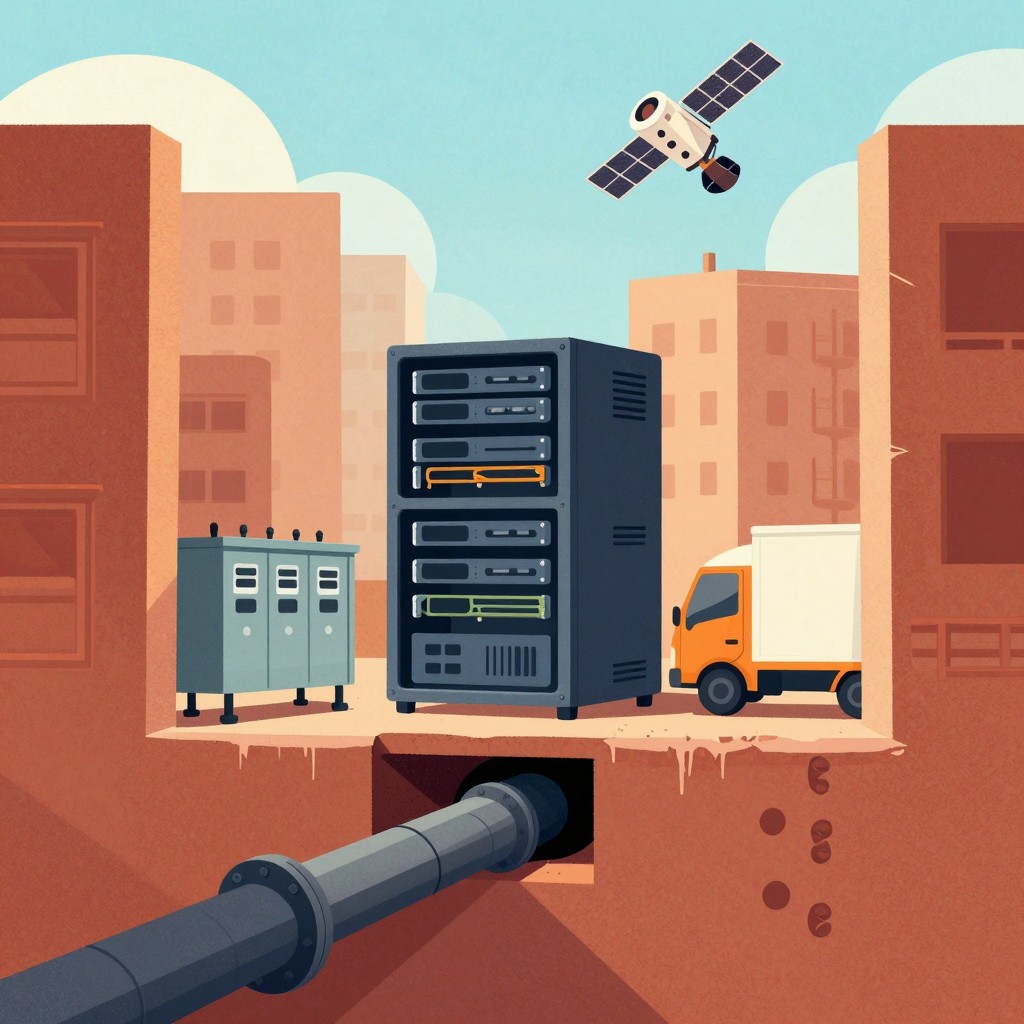
Maya: Last time, on “How GPS Finds You,” we had tiny clocks in space doing, honestly, way too much math for us. Today, I hit play on a video while making toast, and suddenly I’m thinking, where was that video five seconds ago? Silas: Hopefully not inside the toaster. Though some smart appliances are getting ambitious. Maya: Right? But really, you tap play, and it feels like the video just appears from, uh, “the internet,” this misty cloud place. Silas: Which is a charming logo for, basically, somebody else’s very real building full of computers. Maya: Exactly. Picture your phone sending out a little request card. “Hi, I would like episode three, please.” Your app or browser sends that request through your Wi-Fi router, then your internet provider, then across a chain of networks. Silas: And it’s not one giant pipe with your name painted on it. Maya: No, it’s more like changing trains. Your request gets passed along, network to network, toward wherever the video can be found. Silas: And first it needs an address, right? Because “that cooking video with the cheerful woman” is not helpful to a computer. Maya: Ha, tragically, no. The service has internet addresses for its systems. Then the request may reach a data center, which is, you know, a real facility with rows and rows of servers, storage machines, cooling, power systems, the whole industrial pantry. Silas: More than ten thousand data centers around the world, and we still call it “the cloud.” Very fluffy branding for a warehouse that needs serious air conditioning. Maya: Totally. Somewhere, the original video might live on storage in one of those places. Servers fetch the pieces you asked for, or sometimes do a little work, like checking your account or choosing the video quality. Silas: But ideally, your request doesn’t have to travel all the way to the original copy. Maya: Yes. This is where a CDN comes in, a content delivery network. Think of it like a neighborhood pantry stocked with popular snacks. If lots of people nearby are watching the same show, a cached copy may sit on a server closer to you. Silas: So instead of sending someone across the country for milk, you grab it from the corner shop. Maya: Exactly. Less distance, usually faster start, less chance you stare at that little spinning circle and begin questioning your life choices. Silas: But if the nearest cache doesn’t have it, or the original system is far away, the data may travel a very long route. Including, surprisingly, under the ocean. Maya: Yep. Undersea fiber cables. Not satellites for most international internet traffic, but actual cables on the seafloor, connecting cable landing stations on different coasts. Silas: Which makes buffering feel slightly more dramatic. Your sitcom could be waiting on data that crossed an ocean. Maya: And if a cable is damaged, by weather or human activity, traffic may need to detour. More crowded route, slower delivery, hello, blurry video. Silas: Then the video arrives not as one neat movie-shaped blob, but as packets, little labeled pieces. Maya: Your device gathers them, puts them back in order, and keeps a small stash ahead of what you’re watching. That stash is the buffer, like filling a few cups before the party starts. Silas: Unless the cups arrive slower than you drink them. Maya: And then, uh, the party pauses. But next time you tap play, you can picture it, your tiny request card hopping through real cables, real buildings, maybe a nearby cache, all so you can watch bread rise. Silas: Beautiful. And vaguely exhausting for the bread. Maya: We’ll let it rest. Thanks for following the wires with us. Silas: See you next time, uh, wherever the internet happens to be keeping us.