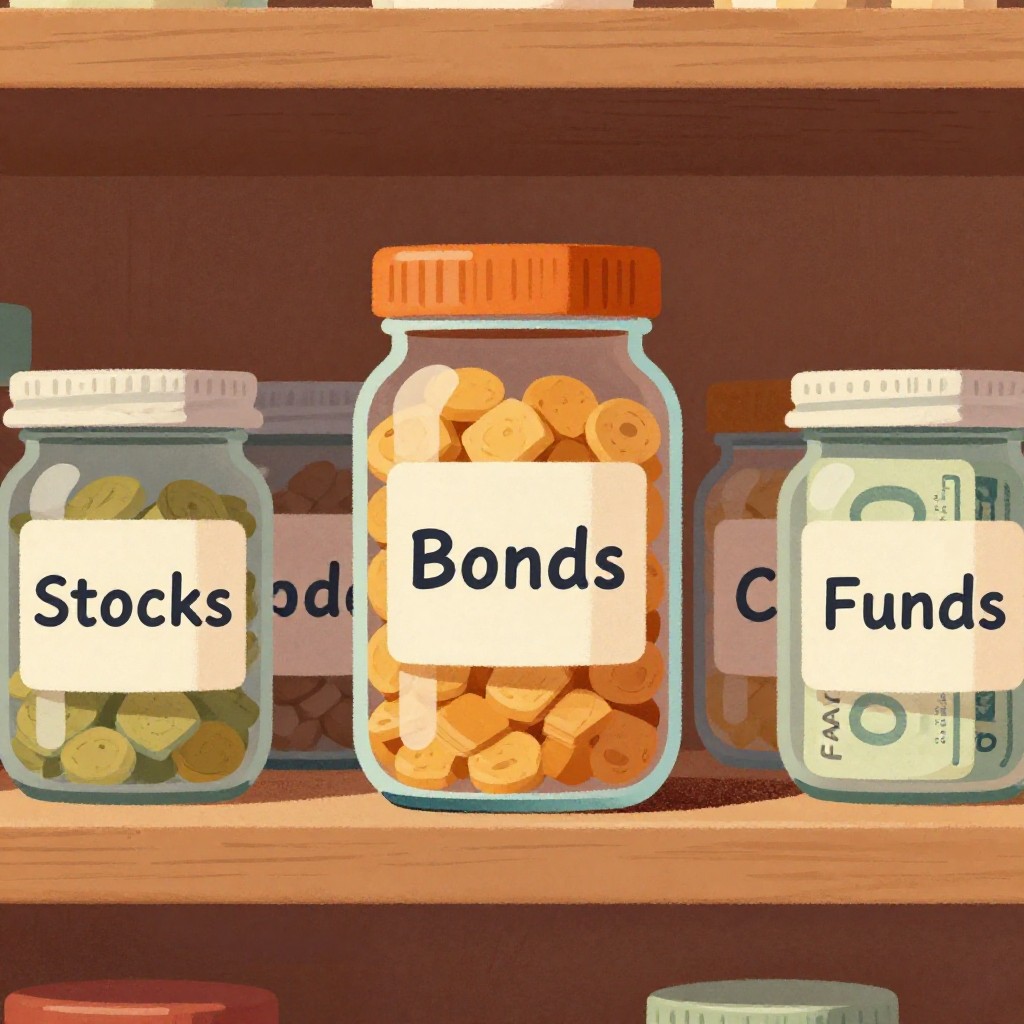
Types of Investments: What to know and where to start
Types of investments can feel overwhelming — stocks, bonds, real estate, cash, funds, and more. This page breaks the main categories into clear, usable ideas so you can decide what to learn next.
If you prefer audio, NextListen turns any topic (or your uploaded notes) into a short, multi-episode podcast course in about two minutes. Try a free sample and listen to shows like "Money Map in 6 Minutes," "Money Basics Nobody Taught You," or "Steady Cover, Growing Cash."
- Free to try
- Ready in ~2 minutes
- Personalized to you
Start listening
 3 EP
3 EP 3 EP
3 EP 2 EP
2 EPInside “Money Map in 6 Minutes”
- Where Your Money Actually Goes2 min
A quick, practical way to map income into four clear buckets.
- Build a Real Emergency Fund Fast2 min
How to automate saving and create small, specific sinking funds.
- Tame Debt and Start Investing Simply2 min
Prioritize high-rate debt, capture employer match, and begin tiny investing.
The main categories, explained simply
Think of investments as vehicles with different goals: growth (stocks, equity funds), income (bonds, dividend-paying funds), stability (cash, CDs), ownership of things (real estate, REITs), and diversified baskets (index funds, ETFs). Each has a tradeoff between potential return, risk, and how easily you can sell it.
When each type makes sense
Use cash and short-term instruments for emergency savings and near-term goals. Bonds and income strategies suit someone prioritizing steady payouts. Stocks and equity funds are for longer horizons when you can ride out ups and downs. Real estate can add cash flow and diversification but needs more time and management. Index funds and ETFs are a simple way to get broad market exposure with lower fees.
Get this as a short, guided podcast — personalized
NextListen turns the topic of "types of investments" into a binge-able mini-series with two natural-sounding hosts. Pick the depth you want, upload a PDF of your notes, or ask for examples tailored to your age, risk comfort, and goal. Shows like "Money Map in 6 Minutes," "Money Basics Nobody Taught You," and "Steady Cover, Growing Cash" show how concise, evidence-led episodes can make decisions feel doable.
A taste of the audio
From “Where Your Money Actually Goes”:
MayaEver see your paycheck hit and think, “Nice,” then, uh, two weeks later wonder where it all went? Today, we give every dollar an address.
FelixWelcome to Money Map in 6 Minutes. This is episode one, and we’re starting with the useful question, where does your money actually go?
MayaPicture a physical filing system. Four folders you open every paycheck, not some vague budget you make once and forget.
FelixFolder one, fixed costs, like rent or regular bills. Folder two, true needs, the essentials that can change month to month. Folder three, growth, meaning savings or investing. And folder four, fun.
MayaIt’s simple, but it’s kind of calming. Your money isn’t disappearing into a fog... it’s going into folders you can check.
FelixLet’s use a $2,500 paycheck. A 50/30/10/10-style split means $1,250 for fixed costs, $750 for true needs, $250 for growth, and $250 for fun.
MayaAnd this is the important bit, it’s a check-in rule each pay cycle. You look at the folders, then make the split fit real life.
FelixSay fixed costs are $1,350 this month, not $1,250. Don’t pretend they aren’t. Keep growth at $250, keep needs at $750, and trim fun from $250 to $150.
MayaSee? No shame, no mystery. Just moving the papers in the filing cabinet.
FelixNext episode, we’ll make those folders easier to use in real life.
MayaUntil then, open the four folders on your next payday. You’ve got this.
Questions, answered
What exactly counts as an investment?
An investment is anything you buy expecting it to generate income or increase in value over time — stocks, bonds, real estate, funds, and some cash instruments qualify.
Can NextListen explain these types to my level of experience?
Yes — you can request a beginner-friendly primer or a deeper, evidence-led series, and the hosts and examples will be tailored to your familiarity and goals.
I have a PDF with my notes — can NextListen use that?
Yes. Upload a PDF and NextListen will turn it into a multi-episode podcast course that matches your content and tone.
How long does it take to make a show?
Shows are created in about two minutes, and you can preview or adjust length, style, and personalization before you listen.
Want this made just for you?
Tell NextListen exactly what you’re curious about — the angle, the depth, even the vibe of the hosts — and it builds your show while you pour a coffee.