Art history podcast you can binge in minutes
Looking for an art history podcast that actually fits your schedule and interests? NextListen turns the history of art and major movements into a binge-able multi-episode audio course with two natural-sounding hosts — created in about two minutes.
Pick a topic (Renaissance painting, modernism, non-Western art), upload a reading or syllabus, or let us personalize a series to your level. Try for free with no app install and listen right away.
- Free to try
- Ready in ~2 minutes
- Personalized to you
Start listening
 3 EP
3 EP 2 EP
2 EP 3 EP
3 EPInside “Empires History Class Skipped”
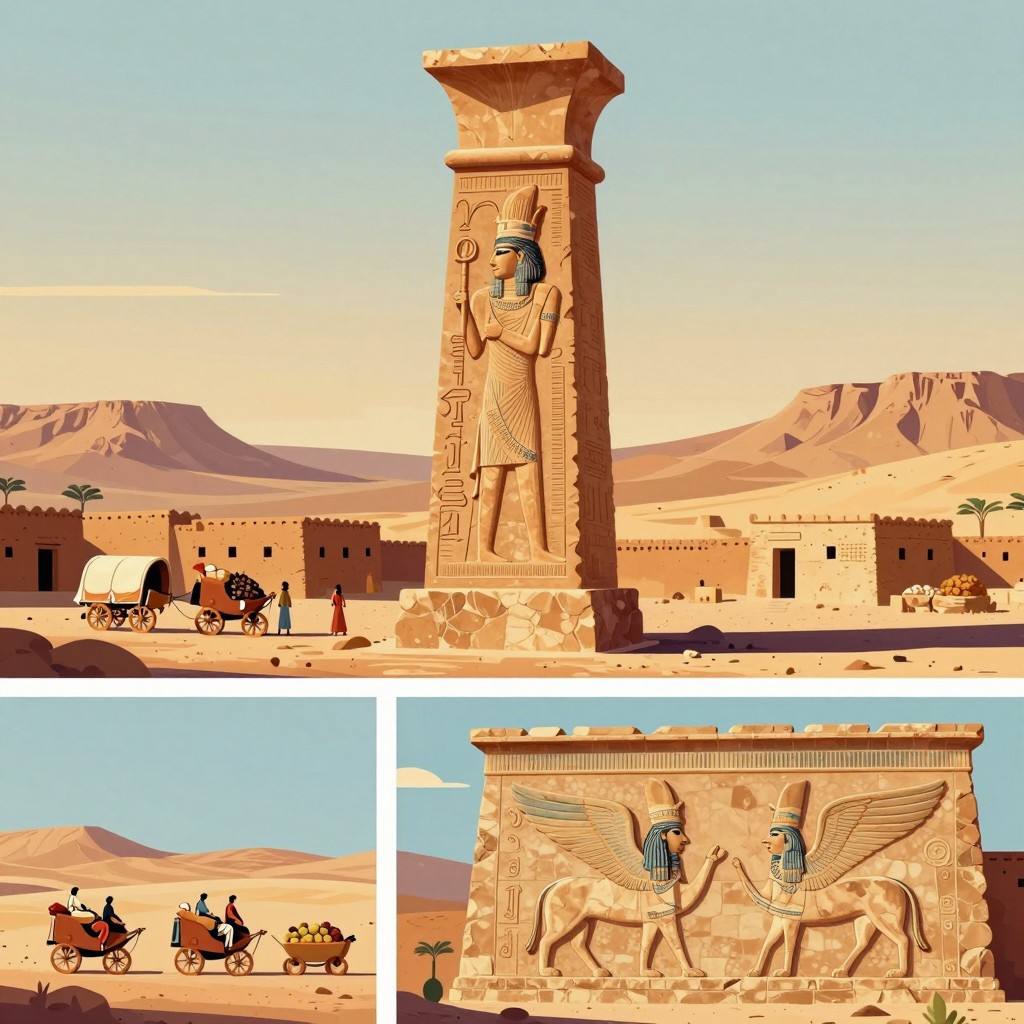
- Aksum: The Highland Power with a Script4 min
How Aksum built monumental stone, an early alphabet, and a Christian state — and how archaeology and inscriptions tell that story.
- Kanem–Bornu: Lake Chad’s Long-lived Empire4 min
Why Kanem–Bornu shaped Central African trade and politics for over a millennium — shown by trade records, chronicles, and material culture.
- Neo‑Assyria: The Near East’s First World Empire4 min
What makes Neo‑Assyria (911–609 BCE) a first 'world' empire — military, bureaucracy, and the library evidence that survive in clay and reli…
From broad movements to focused mini-lectures
We break art history into short episodes that build: context, a few key works, and why they mattered. Example shows on NextListen — like 'Empires History Class Skipped' and 'When Rome Met the World' — model the concise, evidence-led storytelling you’ll hear in our art courses.
Personalize it: your reading, your level, your hosts
Upload a PDF syllabus, museum guide, or article and we’ll turn it into a conversational series with two hosts who trade insights and questions. Prefer beginner, survey, or deep-dive? Choose the depth and episode count; 'How Things Stand and Move' shows the quick, vivid style used for science-adjacent episodes.
Listen where you already are
No downloads required — play in your browser or export shows to your preferred app. Each course is shareable and ready in minutes, so you can go from curiosity to a tidy listening plan for a commute, a study session, or an afternoon at the museum.
A taste of the audio
From “Aksum: The Highland Power with a Script”:
AmaraHere’s the thesis for episode one: Aksum was a highland African power that made itself visible... in stone, in coins, and in script, while connecting the Red Sea to the Roman Mediterranean and the Indian Ocean.
TariqWhich is already a useful correction, right? Because if your mental map of the ancient world is Rome, Greece, Persia, China... Aksum can feel like it arrives late in the story.
AmaraIt should not. Aksum flourished roughly from the 1st to the 7th century CE, centered in the northern Ethiopian highlands and Eritrea. Its influence extended into parts of what are now Djibouti, Sudan, Yemen, and Saudi Arabia.
TariqAnd we’re not calling it powerful just because later traditions remembered it that way.
AmaraExactly. We have royal inscriptions, written in Ge'ez script; monumental stelae; coinage in gold, silver, and bronze; and archaeological remains including palace foundations. Those are material signs of organized rule, wealth, and royal authority.
TariqThe stelae are the visual knockout punch. These were carved stone pillars, some up to 33 meters tall.
AmaraYes. They served as royal tombs and symbols of power. Imagine the political message: this kingdom could quarry, carve, move, and raise enormous stone monuments.
TariqState capacity, made impossible to ignore.
AmaraPrecisely. And Aksum’s power was not confined to the highlands. Its key port was Adulis, on the Red Sea. Through that network moved ivory, gold, incense, spices, glass, and textiles.
TariqSo Aksum sat on a route linking Roman consumers, Red Sea merchants, and the Indian Ocean world.
AmaraThat is the broad picture. And in the 3rd century CE, the Persian prophet Mani listed Aksum among the world’s four great powers, alongside Rome, Persia, and China.
Questions, answered
Can NextListen turn a university lecture or PDF into an audio series?
Yes — upload your PDF or lecture notes and NextListen converts them into a multi-episode audio course with natural-sounding hosts and clear episode breaks.
How long does it take to create a show?
Shows are generated in about two minutes. You can then tweak length, tone, and level before listening or exporting.
Are the hosts AI voices or real people?
They’re AI voices crafted to sound like two real hosts having a thoughtful conversation — built to be easy to follow and listen to for multiple episodes.
Can I get episodes tailored to UK art history or specific movements?
Absolutely — pick regional focuses (UK, Europe, global) or movements (Baroque, Impressionism, modernism), and the generator will assemble episodes that match your chosen scope.
Want this made just for you?
Tell NextListen exactly what you’re curious about — the angle, the depth, even the vibe of the hosts — and it builds your show while you pour a coffee.