 5 EP
5 EPEpisodes
Transcript
Episode 1 · What Toddlers Are Learning Now
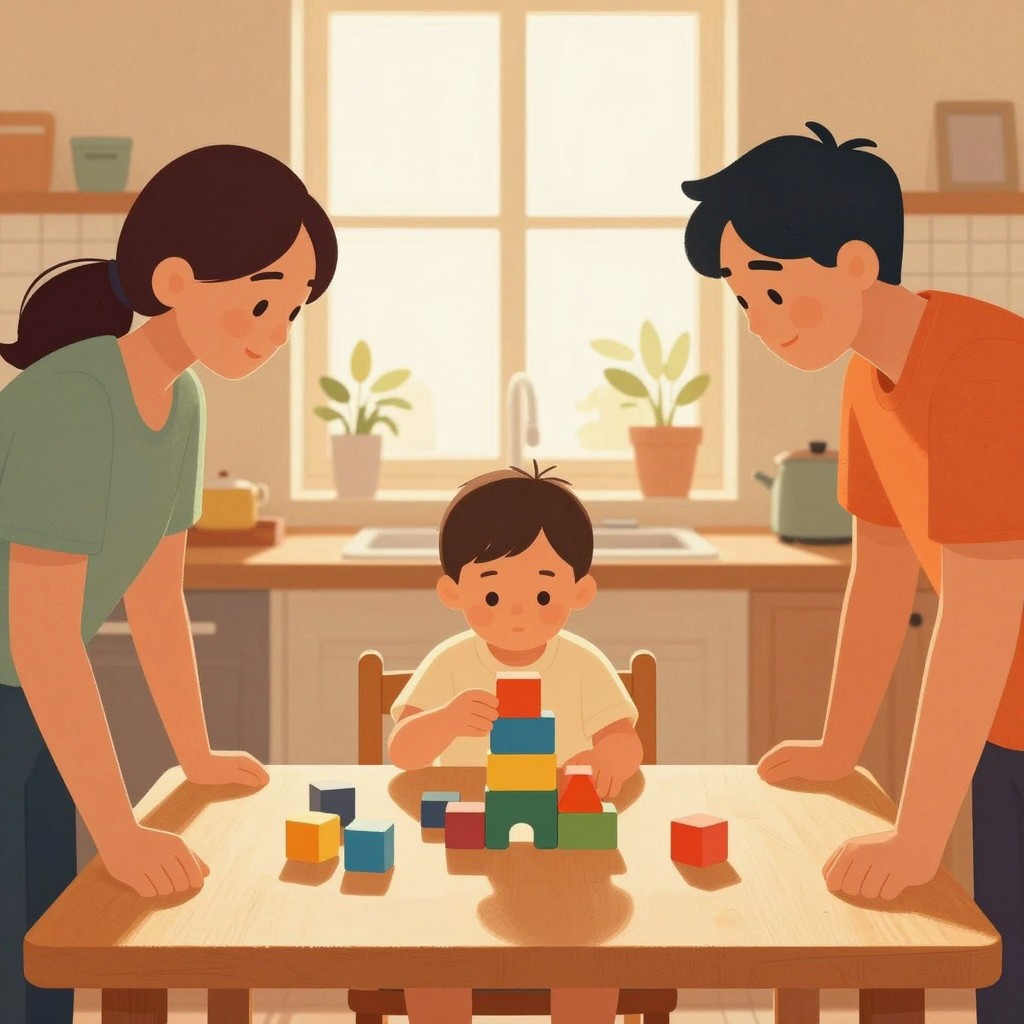
Iris: If your toddler just yelled, “Me do it!” and then burst into tears because the shoe would not cooperate... honestly, welcome. That is not necessarily misbehavior to fix. It is often development happening very loudly. Mateo: Very loudly. Usually while you are already late. Welcome to Toddler Toolkit: 5 Quick Lessons. I’m Mateo. Iris: And I’m Iris. This first episode is a quick crash course in what toddlers are learning now, so you can set expectations that are realistic, not Instagram-realistic. Mateo: Which is helpful, because a toddler can seem wildly capable one minute, then completely overwhelmed by a banana broken in half the next. Iris: Exactly. Development is uneven. A child may be gaining movement, language, problem-solving, and social skills all at once, without having much ability yet to manage frustration. So independence, big feelings, and tantrums can show up together. Mateo: They want control, but they do not always have the skills, words, or emotional brakes for the job yet. Iris: Right. And the CDC’s guidance is not, “Check one box and relax forever.” It emphasizes watching growth and changes over time, across play, learning, speech, behavior, and movement. Mateo: Okay, practical action number one, a one-minute milestone check. Not a test. Just a quick, calm look at what you’re seeing lately. Mateo: Ask: Are they walking or running around? Are single words showing up, or early little phrases, like “more milk”? And socially, do they play near other children, or notice when someone is upset? Iris: Those are useful broad areas to notice. For context, by 24 months, most toddlers can run, kick a ball, and begin jumping with both feet. Language also changes fast: at 12 months, toddlers typically have one to three words; by 24 months, the average is about 50 words, often with two-word phrases. Mateo: And if your child has 50 words but says “no” 49 times... Iris: That is still language. Mateo: Also, do not turn dinner into a performance review. Just notice. Maybe you hear a new word during bath, or see them try to comfort a crying sibling. By around 24 months, toddlers may begin noticing when others are upset and try to comfort them. Iris: Action two: protect a 10-minute daily play-for-learning slot. Short is fine. Make-believe with a cup and stuffed animal, stacking blocks, or simple size and quantity games. Mateo: Try, “Can Teddy have one cracker? Now two?” Or, “Which cup is bigger?” No quiz voice required. Just play. Between 12 and 24 months, toddlers can stack two blocks, and by 24 months they can build towers of six or seven blocks. Iris: And action three, watch concerns over time. One hard day, or one missed skill, is not a diagnosis. Mateo: But if a delay persists, call the pediatrician. That is not overreacting. It is normal, proactive follow-up, and you do not have to figure it out alone. Iris: Your toddler is not giving you a hard time every time they melt down. Often, they are having a hard time while learning an enormous amount. Mateo: Next episode, we’ll turn that into a few everyday ways to support learning without making your whole house feel like preschool. Iris: See you then.
Episode 2 · Talk So They Talk Back
Iris: Last time, in “What Toddlers Are Learning Now,” we talked about how much learning is happening in those ordinary little moments. Today, let’s use those moments to help toddlers talk, and listen, a bit more. Mateo: Because nobody needs another complicated activity, right? We’re not adding a language lesson at 6:15 while someone’s crying over the wrong cup. Iris: Exactly. The first move is a two-minute narration burst. CDC guidance and other child-development guidance support talking responsively during routines, describing what you and your child are doing. The evidence is strongest for regular back-and-forth interaction, not for perfect wording. Mateo: So, pick a routine you already have. Shoes, snack, bath, getting into the car. For two minutes, just say what’s happening. Mateo: “You found your sock. Blue sock. Now I’m pulling it over your toes.” Or, “I’m washing the apple. You’re holding the bowl. Splash.” Iris: Short phrases are fine. Toddlers do not need a running commentary all day. Brief, repeated language during familiar routines gives them words connected to what they can see and do. Mateo: And if they wander off halfway through, that still counts. You’re not performing. You’re just, uh, leaving little language breadcrumbs. Iris: That’s a good description. The second move is an active listening cycle. When your toddler points, gestures, babbles, or uses a word, respond to the attempt. If it helps, get down to their level, make eye contact, then repeat what you heard and expand it once. Mateo: Like your child points outside and says, “Dog!” Mateo: You could say, “Dog, yes. Big dog walking.” Then pause. You don’t have to quiz them, like, “What color is the dog? What is the dog doing? Where is the dog going?” Iris: Right. Responsive, serve-and-return exchanges are supported by developmental guidance because they show the child that their communication gets a meaningful response. We should be careful, though, this is guidance based on a broad body of child-development evidence, not a guarantee that one phrase creates a language jump. Mateo: But it can make conversation feel easier. They say, “More,” and you say, “More banana.” They say, “Car,” and you say, “Fast car.” One small add-on, then give them room. Iris: The third move supports listening: use one clear instruction at a time, then praise the follow-through immediately. Clear one-step directions and specific praise are commonly recommended in public-health parenting guidance. Mateo: Instead of, “Get your shoes, come here, and stop touching that,” try, “Put your shoe in the basket.” Then, the second they do it: “You put your shoe in the basket, thank you.” Iris: Specific praise helps them connect the action with your response. If they do not follow through, shorten it further, or help them begin. “Shoes in basket,” while you point. Mateo: And maybe track one word or phrase this week. Just one. “More,” “help,” “all done,” whatever they’re working on. Not to grade them, just to notice those tiny changes. Iris: Two minutes of narration, one responsive expansion, one clear instruction with immediate praise. Small tools, repeated often. Mateo: Next time, we’ll bring another quick lesson for the very real toddler years.
Episode 3 · Routines, Rules, and Predictability
Iris: Last episode, “Talk So They Talk Back,” was about simple communication routines that boost language and cooperation. Today, let’s talk about the moment communication is not the problem, exactly... it’s that your toddler has just learned it is time to leave the playground. Mateo: And suddenly they have very strong feelings about the slide. The same thing can happen at bedtime, getting dressed, leaving Grandma’s, all of it. Iris: Right. Consistent routines and clear rules give toddlers structure. They help children understand what to expect, which can reduce anxiety. Predictable schedules also support secure attachment and smoother self-regulation. Mateo: So this is not about running your house like an airport terminal. Iris: No. The useful ingredients are consistency, predictability, and follow-through. Flexible when life requires it, certainly, but not reinventing the plan every day. Mateo: Okay, tonight’s assignment, pick one routine, morning or bedtime, and make it under five steps. Not twelve. Under five. Iris: Exactly. A bedtime version might be, diaper or toilet, pajamas, two books, lights out. Same order, most nights. Mateo: And rehearse it when nobody is already melting down. You can say, “After pajamas, we pick two books. Then lights out.” If your child is old enough to help, let them point to little pictures of the steps, or choose which pajamas come first. Iris: That involvement can promote independence and confidence. But the key is that the sequence stays recognizable. Mateo: Because in real life, you will miss a night. You’ll get home late. Someone will be sick. Fine. The goal is not perfection, it’s returning to the pattern. Iris: Yes. Then add one clear family rule. Specific is better than vague. “Hands are gentle” is clearer than “Be nice.” Mateo: Post it somewhere you’ll both see it, maybe with a simple picture, and practice it for two weeks. Not seven rules. One. Iris: And decide the brief consequence before you need it. If the rule is “Hands are gentle,” you might say, “Hitting means play pauses. I’m moving you away.” Mateo: Short, calm, linked to the rule. No big speech while you’re trying to separate two furious toddlers. “Hands are gentle. Play pauses.” Then follow through. Iris: Consistent follow-through helps the rule become predictable, too. It also helps parents respond more confidently. Mateo: My favorite tiny tool is the 60-second warning. Before a transition, say, “In 60 seconds, we’re leaving the playground. One more slide, then shoes.” Iris: That pre-warning primes the expectation. It does not guarantee happiness, but it makes the transition less abrupt. Mateo: And when the minute is up, you do the boringly reliable part. “Time to go. You wanted one more slide, and you got it. Now shoes.” They may still protest. That does not mean it failed. Iris: Exactly. Predictability is built through repetition, not through a toddler agreeing with the limit. Mateo: Try one short routine, one posted rule, and one 60-second warning this week. Next episode, we’ll add another practical piece to the toolkit.
Episode 4 · Healthy Habits You Can Start Today
Iris: Last time, in “Routines, Rules, and Predictability,” we talked about building small, consistent structure to reduce battles and boost security. Today, let’s use that structure for healthy habits that are actually realistic on a Tuesday. Mateo: Specifically, a Tuesday when someone has put a sock in the water bowl and dinner is somehow happening at 4:47. Iris: Exactly. We’re keeping this narrow: one food habit, two little movement windows, and a bedtime routine. CDC guidance supports regular routines, active play, healthy eating, and adequate sleep as helpful foundations for toddler development. Mateo: And “foundation” is the key word. Not “do this perfectly or you’ve ruined everything.” Iris: Very much not. First habit: at one meal today, offer one extra fruit or vegetable, and model tasting it yourself. The goal is exposure, not getting a toddler to eat three bites on command. Mateo: So, if cucumber is already on the plate, maybe add a few berries. If they usually eat pasta, add peas on the side. Tiny portion. No big speech. Iris: Right. Age-appropriate portions matter, and variety matters over time. The evidence-based guidance is simple here: offer fruits and vegetables at meals. We should be cautious about overselling any one food or one successful dinner. Mateo: My practical script is: “These are peas. You don’t have to eat them. I’m having some.” Then you actually eat one. And if they say, “Yucky,” you can say, “You don’t like it today.” No courtroom drama. Iris: That protects the routine around meals, too. Offer, model, move on. Mateo: Habit two: movement. CDC guidance says toddlers should get at least 60 minutes of physical activity daily, including both structured and unstructured play. But don’t hear that and picture organizing a toddler boot camp. Iris: Two planned ten-minute active-play windows can be a very workable starting point. They don’t have to make up the full hour by themselves. They simply make activity more likely in a busy day. Mateo: Ten minutes after breakfast: dance to two songs, hallway races, balloon taps. Ten minutes later on: “Can you carry these pillows to the couch?” Outside is great, but inside absolutely counts. Iris: And if your toddler refuses the planned game, follow their lead. Chasing bubbles, climbing safely at the playground, or marching around the kitchen still qualifies as active play. Mateo: Okay, third habit, the one parents are probably feeling in their bones: sleep. Iris: For toddlers ages two to three, CDC guidance is 11 to 14 hours of sleep in a 24-hour period, including naps. Individual schedules vary, so the useful first step is not guessing. Track sleep for one week. Mateo: Just jot down roughly when they fall asleep, wake up, and nap. Then ask, “Are we landing somewhere near that total most days?” Not, “Did last night go flawlessly?” Iris: Exactly. If bedtime is drifting late, build a consistent sequence: perhaps pajamas, teeth, two books, lights low, bed. Keep it short enough that you can repeat it when you’re tired. Mateo: And if they keep popping up for one more thing, try: “You want another book. We’re done with books tonight. Tomorrow, you can choose again.” Warm voice, same answer, boringly consistent. Iris: These habits work best as repeats, not as grand resets: one extra produce offering, two ten-minute play windows, one steady bedtime sequence. Mateo: Small changes count. Next episode, we’ll keep building the toolkit with another practical piece of toddler life.
Episode 5 · Handle Tantrums, Separation, and Sharing
Iris: Last time, “Healthy Habits You Can Start Today” was all about tiny changes to food, activity, and sleep. And then, of course, your toddler melts down because you handed them the blue cup. Mateo: The blue cup betrayal. Very real. Today, tantrums, separation, and sharing, which can all feel like emergencies, even when they’re very normal toddler moments. Iris: Right. For tantrums, the evidence-informed basics are reassuringly simple. Toddlers often get overwhelmed by frustration, by not being able to do something yet, or by not having enough language for what they feel. In the moment, stay calm, name the feeling, and give one simple limit. Mateo: So not a speech. Not, “We discussed this, and here are the five reasons we cannot throw yogurt.” Iris: Exactly. One sentence can be enough: “You’re mad you want more yogurt. Yogurt stays on the table.” Mateo: And your voice matters. Low, boring, steady. You can be close by, but you don’t have to fix the feeling. I might say, “I’m here. You’re really upset. I won’t let you hit.” Then I stop talking for a second. Iris: That pause is useful. Giving in during the tantrum can accidentally teach that escalating gets the result. But after they’ve calmed, that’s when you can revisit it briefly: “You were mad. Next time, say, ‘Help, please.’” Mateo: And if you notice the same crash happens before dinner, or when shoes go on, that’s your clue. Offer a tiny choice before things go sideways: “Red shoes or gray shoes?” Not, uh, “What would you like to do with your afternoon?” Iris: Yes. Simple choices and predictable routines can reduce some conflicts, though no routine eliminates tantrums entirely. Mateo: Okay, separation. The hard daycare drop-off, the babysitter handoff, the bedroom door cling. Iris: Separation anxiety can look like crying, clinginess, or refusing to let you leave. A practical strategy is a brief, consistent goodbye, practiced over several days. The consistency matters more than making it elaborate. Mateo: Here’s a script: “Two hugs, then I go. You stay with Nana. I come back after snack.” Same words, same order. Maybe they hold a familiar stuffed animal, too. Iris: And avoid sneaking away if possible. Clear, calm communication helps build predictability, even if they still cry. Mateo: Which is the part parents need to hear. Crying at goodbye does not automatically mean the goodbye was wrong. Keep it short. “I love you. See you after snack.” Then go, even if your whole body wants to turn around. Iris: Finally, sharing. Developmentally, it’s complex. Toddlers may not fully understand it yet, so we should think practice, not perfect generosity. Mateo: Try a two-minute timed-turn game. Set a timer: “Mateo’s turn until the beep, then Iris’s turn.” When the child hands it over, praise it immediately: “You gave me a turn, that was helpful.” Iris: Specific praise reinforces the cooperative attempt, even if it’s small. Mateo: And if they grab it back, don’t make it a moral crisis. “You want it back. It’s Iris’s turn, then beep, then you.” Calm, repetitive, kind. Iris: Big feelings, short scripts, lots of practice. Mateo: You’re not trying to prevent every wobble. You’re helping them learn what to do inside one. Iris: We’ll see you next time.