 1 EP
1 EPEpisodes
Transcript
Episode 1 · What the corrupted scan actually tells you
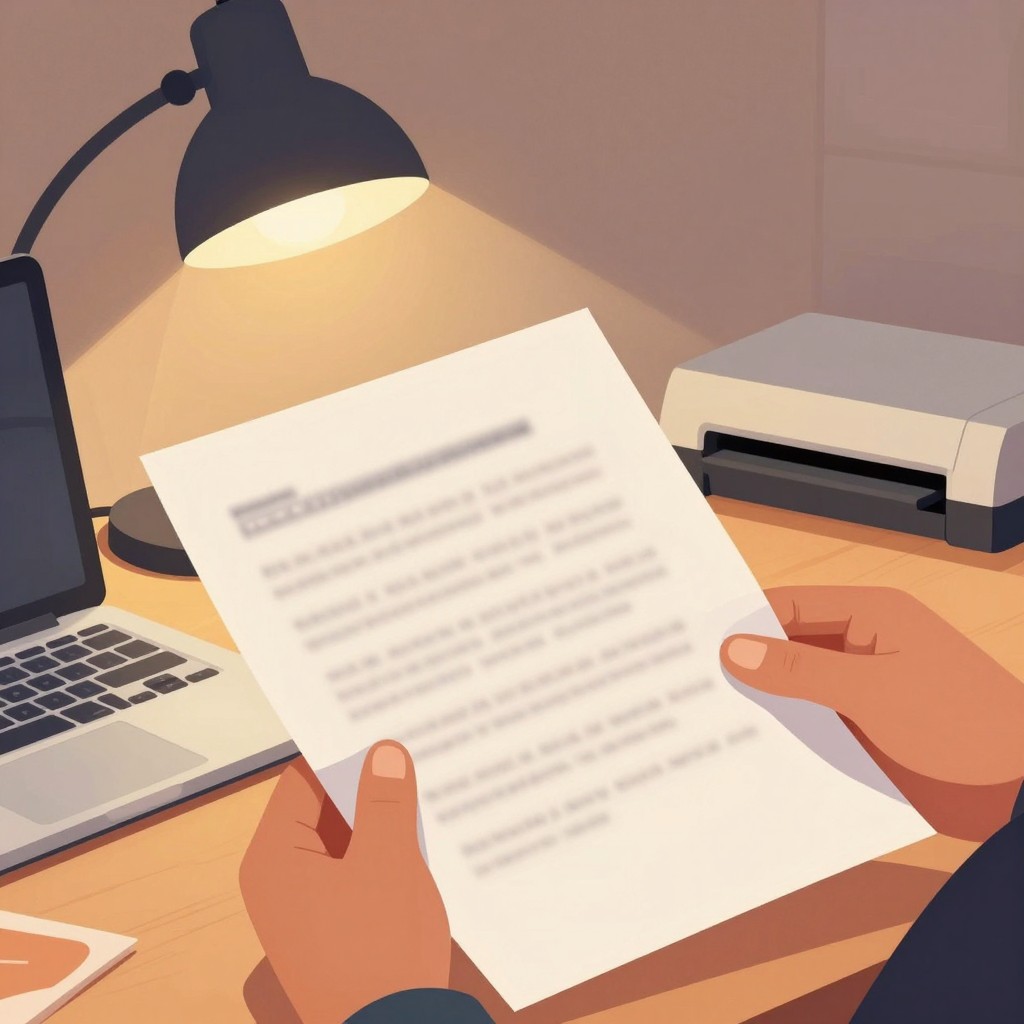
You open a PDF hoping for a sentence... and get a blizzard of commas, broken letters, stray parentheses, and symbols that seem to be arguing with each other. Frustrating, yes. But it’s also a clue. I’m Maya, and today we’re looking at what a corrupted OCR scan can still tell you, what it absolutely cannot tell you, and how to get unstuck. First, the honest read: this extracted text is mostly noise. The prose hasn’t survived in a trustworthy form, and anything that looks like math, notation, or a quotation has been shattered into fragments. So pause here. Don’t try to “solve” the gibberish by guessing. That’s how a plausible mistake turns into a confident one. Now, there are still faint footprints. You may see repeated markers, parenthetical numbers, line breaks, maybe heading-like shapes or recurring variable-looking characters. Those tell you the original pages had structure. They may even help you spot where sections begin or where a numbered list continues. But structure is not content. From this OCR alone, you can’t safely recover formulas, transformations, constants, proofs, names, dates, or numerical evidence. A broken symbol is not a missing answer. It’s just... a broken symbol. Why did this happen? Usually, the scan gave the OCR too little to work with. Low contrast can make ink fade into paper. Blur or a slightly slanted page can merge letters. And dense notation, especially equations mixed with text, makes a text-only OCR engine see fragments where meaning used to be. So here’s the recovery checklist. First, get a high-resolution scan, or take straight-on phone photos with even lighting. Next, prioritize pages with heavy notation, tables, diagrams, or footnotes. Then use a math-aware OCR tool, or a hybrid workflow: equation recognition for notation, standard OCR for the surrounding text. Remember this: the corrupted scan is not the document. It’s evidence that the document needs a better doorway. Get the image right first, and the words have a much better chance of coming home.