 2 EP
2 EPEpisodes
Transcript
Episode 1 · Kitchen Table Truths
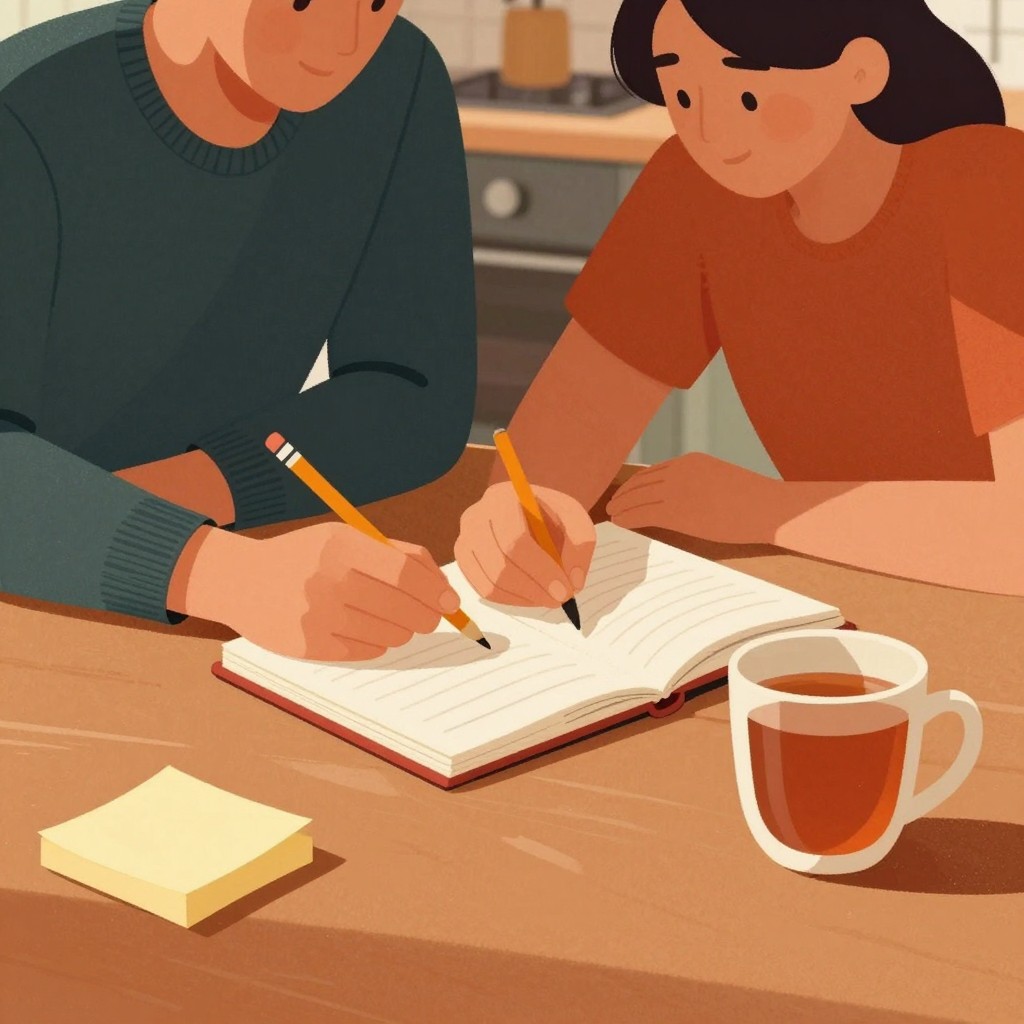
Mira: A teen leans over a kitchen table, pencil tapping. “This one’s easy,” she says. “The heavier ball hits the floor first.” Her uncle looks at the two balls in her hands and says, “Want to test that?” She sighs. “I already know.” Ravi: Ah, the most dangerous four words in homework. Mira: Right? This is episode one of How We Actually Learn, Kitchen Table Truths. We’re looking at why knowing something, or thinking we know it, can shape what we learn next. Ravi: Because the teen isn’t being silly. She has an explanation. It just happens to be wrong. Mira: And wrong ideas can be sticky. New information has to land somewhere. If the old picture in your head is off, the new fact can feel confusing, or just bounce right off. Ravi: Okay, let’s try this with something ordinary. A bouncing ball. Mira: Take a moment. Why does a rubber ball bounce? Don’t look for the perfect school answer. Just notice your first answer. Ravi: Mine used to be, “Because it has energy.” Which is... not exactly wrong, but it doesn’t explain much. Mira: Maybe you thought the floor throws it back up. Or that there’s air inside pushing it. Ravi: So what’s the kitchen-table version? Mira: Drop a rubber ball onto a hard floor. For a tiny moment, the ball squishes. Its material compresses, then springs back toward its original shape, pushing the ball upward. A soft pillow doesn’t give that same firm push, so the ball barely bounces. Ravi: Oh. The ball isn’t just “deciding” to come back. You can picture the squish. Mira: Exactly. Start with what you think. Test it against one concrete example. Then adjust the picture. Ravi: Next time, we’ll talk about what helps that new picture actually stick. Mira: See you at the kitchen table.
Episode 2 · Backyard Experiments and Other People
Mira: Last time, at that kitchen table, we saw homework change when a family member stayed curious instead of supplying the answer. Today, take that curiosity outside. Ravi: Okay, backyard. Two matching cups of water, one in sun, one in shade, thermometer... and immediately I’m thinking: what makes this a real experiment, not us just, uh, checking cups? Mira: Fair question. We agree on one question: which spot gets warmer? Same cups, same amount of water, same time of day. Change one thing... sun or shade. Ravi: And when my cup feels warm, I don’t get to declare victory? Mira: Not yet. We both look, record the temperature, and ask whether we noticed the same pattern. Other people slow down our assumptions. They give us a model, too: I watch how you measure, remember the steps, try them myself, and care a little more because we’re doing it together. Ravi: That’s learning by watching and joining in. Mira: Exactly. Bandura’s social learning theory, proposed in 1977, describes attention, retention, reproduction, and motivation. The backyard version is simpler: make your thinking visible, then let someone question it. Ravi: So, after today? Mira: Run the same small test three times over a few days. Take a photo each time... picture plus notes helps you remember. Then explain the result to someone else: “I think the sunny cup warmed faster because...” Pulling it from memory and adding your why makes it stickier. Ravi: Three trials, photo, tell a person. Mira: And let their questions teach you, too. Thanks for learning with us.