 2 EP
2 EPEpisodes
Transcript
Episode 1 · Survey, Quarries, and the Workforce
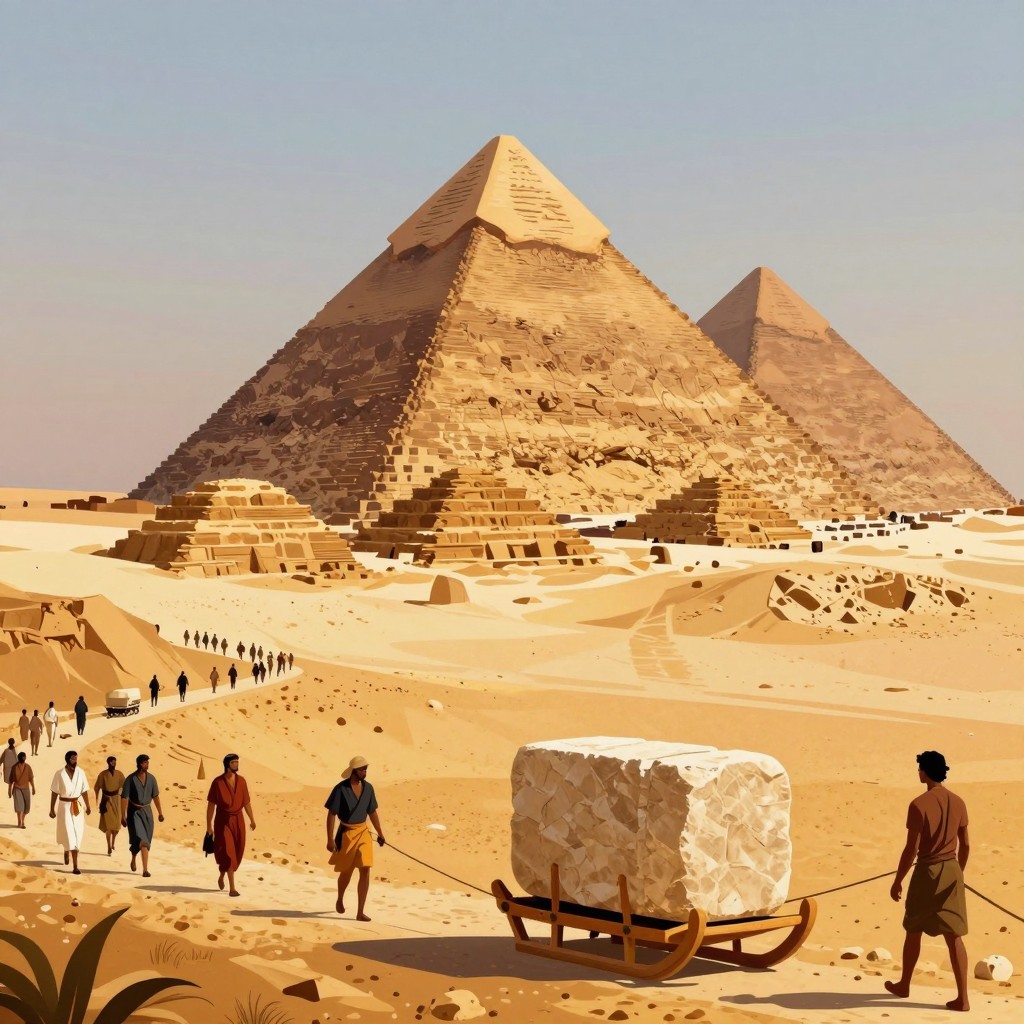
Lina: At dawn, the Nile would have smelled of wet reeds and silt, and up on the limestone plateau, planners for Khufu, around 2560 BC, were, um, drawing the first invisible lines of a pyramid. Omar: Invisible lines, very expensive consequences. Lina: Exactly. They surveyed the site to align it with the cardinal directions, turning sky, shadow, and careful measurement into a square base on the western bank, where the setting sun carried royal meaning. Omar: So before anybody hauled a block, they had to get the layout dead straight. Like building a house, except your foundation is, you know, a whole horizon. Lina: And then came the stone. Most limestone was cut nearby, with copper tools and wooden wedges. You can still find quarry marks and tools around Giza, little rough traces of all that labor. Omar: Local supply for the bulk stuff. But granite, that hard stone, came from Aswan, over 500 miles south. Lina: Floated north by Nile boat, likely reaching a branch of the river that once ran beside the Giza Plateau. At the quayside, blocks could be shifted onto wooden sleds, with water poured onto the sand ahead of them to reduce friction. Omar: Not magic, then. Wet sand, sleds, muscle, planning. Lina: And people. Perhaps 20,000 to 30,000 workers, organized into crews, quarrymen, haulers, masons, engineers, bakers. Workers’ villages, bakeries, even transport graffiti preserve that busy human world. Omar: A pyramid wasn’t one giant push. It was a whole city of jobs. Lina: Next time, we climb with the stone.
Episode 2 · Moving, Raising, and Making It Last
Lina: Last time, in “Survey, Quarries, and the Workforce,” we followed Khufu’s team planning the pyramid, sourcing stone, and organizing 20,000 to 30,000 workers. Omar: And now comes the part that makes my back hurt just imagining it: getting those blocks moving. Lina: Picture the plateau at first light. A wooden sled waits on sand, with a block aboard. Ahead, someone pours water into its path. It reduces friction. Omar: So, less like dragging a sofa across dry carpet, more like a controlled glide? Lina: Exactly. Stone traveled from quarries by sled, while other materials reached Giza by the Nile and artificial waterways. Granite from Aswan came on barges, then joined the dusty final push. Omar: Which means timing mattered. You cannot have barges arriving, sleds waiting, and ramps blocked by the same stone. Lina: A twenty-year project depended on skilled workers coordinating each handoff. To rise, blocks moved up mudbrick ramps coated with plaster to harden their surfaces. Omar: And not one giant straight ramp? Lina: No. Wrap-around ramps made the upper climb workable, curling around the growing pyramid. Omar: Like switchbacks on a mountain trail. Longer route, less brutal climb. Lina: Above the King’s Chamber, relieving chambers distribute pressure. That quiet internal engineering, alongside durable materials and precise construction, helped the pyramid endure for thousands of years. Omar: Stone, water, ramps, and coordination. A mountain made manageable, one careful move at a time. Lina: Thanks for following the climb with us. Until next time.