 2 EP
2 EPEpisodes
Transcript
Episode 1 · Launch: From pilot to national lifeline
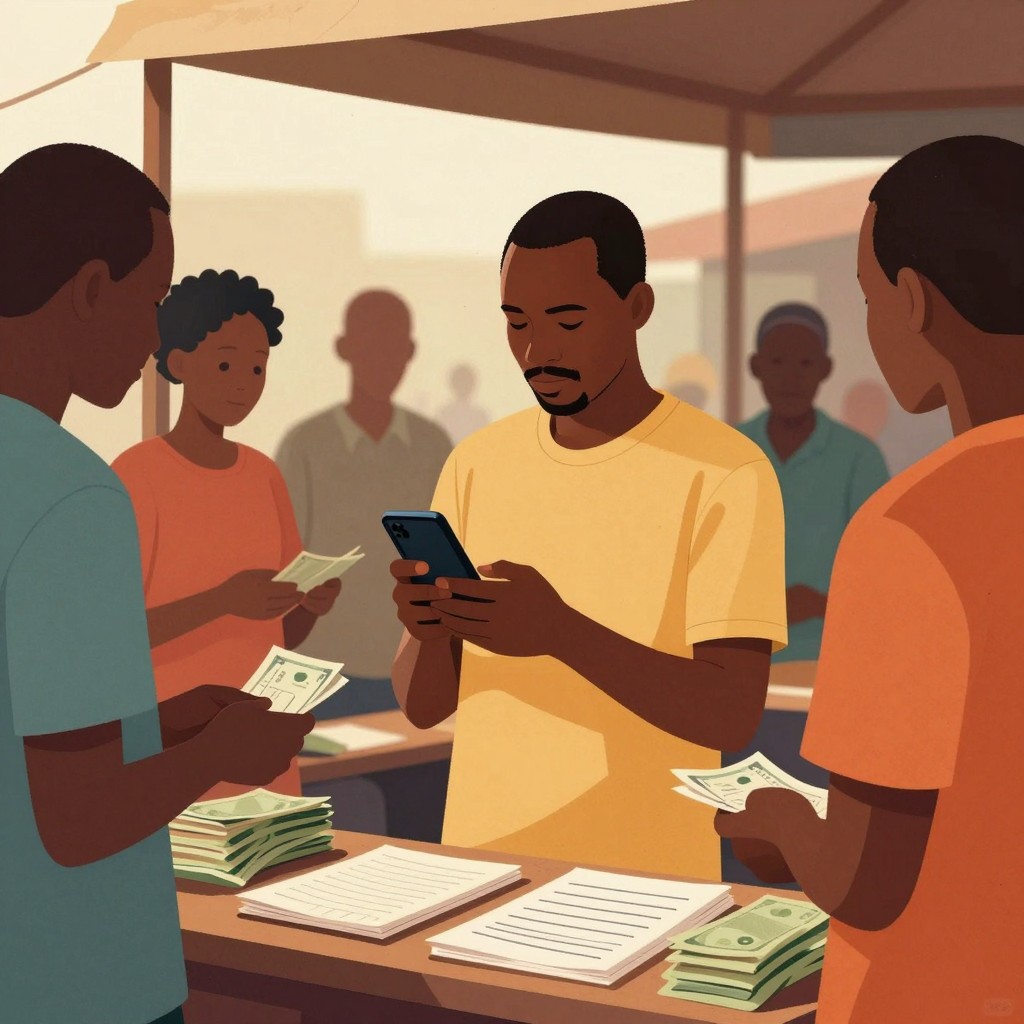
Imagine a morning market in Kenya, before the day’s heat settles in. Traders are arranging tomatoes, charging phones, counting notes by hand. For many people, sending money meant trusting a bus driver, making a long journey, or waiting for someone to come home. Then came a small idea with a much larger future. In October 2005, Safaricom began testing a service for unbanked, pre-paid mobile subscribers. It was called M-Pesa, with funding and technical support from Vodafone and the UK’s DFID. The original purpose was fairly narrow, to help microfinance customers receive loans and make repayments. But pilots have a way of revealing what people actually need. Very quickly, M-Pesa was being pulled toward broader financial life. Not just loans, but the everyday problem of moving value safely and simply between people who did not have bank accounts, or could not easily reach a branch. The early signs were hard to ignore. By March 2006, KSh50.7 million had already moved through the system. That was not a polished product proving itself in a boardroom. It was a practical service finding real demand in the hands of ordinary customers. On March 6, 2007, Safaricom launched M-Pesa nationally. And then came the pressure. As more people joined, the challenge was no longer simply whether the technology worked. The real test was whether the system around it could keep up. More agents were needed, more places where customers could access the service, and stronger infrastructure behind those small transactions happening all over the country. Management made the crucial choice to double down. They invested in the agent network and scaled the system behind it. That decision mattered because M-Pesa’s advantage was never just a clever feature set. It met a real need in a country with a large unbanked population, and it was supported by the patient, operational work of building a service people could actually reach and use. That is how a pilot began its journey toward becoming a national lifeline. Next time, we’ll ask the harder question, why has this success been so difficult for the rest of the world to copy?
Episode 2 · Why the model won’t clone easily
Last time, we followed the simple idea at the heart of M-Pesa, a phone becoming a way to send money home. It sounded modest. In Kenya, it became something much larger. M-Pesa spread beyond Kenya to 10 countries. By December 2016, it had about 29.5 million active customers, moving billions of transactions. Research from MIT found that its growth had real poverty-reduction effects. This was not just a faster way to pay. For many households, it changed what was possible when a child needed school fees, when a shopkeeper needed stock, or when a family faced a bad week. And that success made M-Pesa famous around the world... perhaps too famous in one particular way. People saw the result and assumed the model could simply be copied. Build an app, sign up customers, recruit agents, and wait for the network to grow. But the Kenyan story depended on a rare combination of conditions. There was a large unbanked population, widespread mobile phone use, and regulation that gave Safaricom room to develop the service. There was also trust. At a small agent kiosk, with a painted sign above the door and a queue forming in the afternoon heat, people could hand over cash, see a familiar local face, and know that money could travel safely. That network was expensive to build. It required investment, local partnerships, reliable cash management, and thousands of places where digital value could become notes in a customer’s hand. Elsewhere, regulators made different choices. Established banks had stronger positions and more reason to resist a telecom company moving into payments. And trust does not travel neatly across borders. In some places, customers expected a bank branch. In others, cash remained the only thing that felt certain. South Africa offered a clear reminder. Vodacom ended M-Pesa there in June 2016. The idea endured, and so did its influence. In 2020, Safaricom shifted IP control back to Africa, a symbolic turn for a service born from local needs. M-Pesa was never merely a product to export. It was a system, built place by place, until Kenya made it feel inevitable.