 4 EP
4 EPEpisodes
Transcript
Episode 1 · Inside the 4‑Year‑Old Mind
Iris: Have you ever watched a four-year-old inspect a puddle, then ask why it has a reflection, why it wiggles, and whether it’s “the sky’s mirror”? That is not random chatter. You are hearing a mind that is rapidly getting better at noticing, describing, comparing, and imagining. Jonah: And possibly hearing it while you are, uh, trying to get shoes on and leave the house. Iris: Exactly. Welcome to episode one of Four-Year-Old Science-Savvy Parenting. Today, we are going inside the four-year-old mind, especially their curiosity and their early scientific thinking. Jonah: Which means we are not asking you to turn your kitchen into a preschool lab. We are talking about what to say when your child finds a weird leaf, lines up crackers, or announces that the sofa is lava. Iris: At around four, children are in what developmental researchers call the preoperational stage. They can use symbols, language, and pretend play in increasingly rich ways. A cardboard box can be a rocket. A spoon can be a microphone. Jonah: Or a sword. It is almost always briefly a sword. Iris: Yes. Their thinking is still often centered on their own perspective, so taking someone else’s point of view can be difficult. But alongside that, they are becoming more able to observe carefully, draw or describe what they see, compare objects, and sort them by features such as size, shape, material, or what they do. Jonah: So when they ask, “Why is this one shiny?” we do not need a perfect answer? Iris: Right. The useful move is often to slow down and investigate with them. Think of it less as delivering facts and more as handing them a magnifying glass, metaphorically speaking. Their “why” questions reflect real curiosity. You can build on that by inviting description before explanation. Jonah: Okay, give me the exact parent words. Iris: Try: “What do you notice?” Then wait. Or: “Tell me about this one.” If they have two objects, ask, “Is it bigger or smaller?” “Which one feels heavier?” “Does it feel like wood or metal?” Jonah: And if they say, “This one is bigger,” you can say, “Yeah, I notice that too. This block is longer, and this one is shorter.” You are giving them property words without turning it into a quiz. Iris: That distinction matters. Gentle questions support exploration. A rapid-fire test can shut it down. Four-year-olds learn especially well through hands-on, multisensory exploration and imaginative play. Jonah: So at snack, you might say, “These crackers are both round. What is different about them?” In the bath: “Which cup holds more water?” On a walk: “This bark feels rough. What does that leaf feel like?” Iris: And use open-ended materials. Blocks, paper and crayons, recycled boxes, dramatic-play props. They allow children to sort, build, narrate, and revise an idea. There is no single correct use. Jonah: If they get frustrated because the tower falls, try, “You worked hard on that. What could we try next?” Not, “Here, I’ll fix it.” Small celebrations of effort and progress help, especially because emotional ups and downs are still very normal at this age. Iris: They are also learning to name emotions, cooperate, take turns, and empathize. But knowing the words does not mean they can use them perfectly when they are tired or disappointed. Jonah: Which, honestly, is true for the rest of us too. Iris: Quite. Keep routines steady, leave room for exploration, and let ordinary moments become little observation sessions. Jonah: Next episode, we will stay practical and look at how to support big feelings without making every hard moment bigger. Iris: Until then, notice what your four-year-old notices. You may be surprised by how much science is already happening at your feet.
Episode 2 · Parenting Style That Helps
Iris: Last time, in “Inside the 4-Year-Old Mind,” we talked about how a four-year-old can sort, count, imagine, and understand little pieces of time, which is exactly why, uh, “five more minutes” can become such a big negotiation. Jonah: Right, because they understand enough to argue their case, but not always enough to manage the disappointment when the answer is no. So today, what parenting style actually helps in that moment? Iris: The clearest broad pattern in developmental research is what’s often called authoritative parenting. That means warmth and responsiveness, plus clear expectations and limits. Not harsh control, not, “Sure, anything goes,” but a sturdy middle. Jonah: So, loving, but not endlessly negotiable. Iris: Exactly. Think of it like guardrails on a road. The child still gets to move, explore, make choices, even, you know, take a slightly silly route. But the guardrails keep the road safe. Jonah: And the evidence is stronger for that overall pattern than for any one magic phrase, right? Iris: Yes. These findings are mostly associations, so we should be careful. Researchers generally aren’t randomly assigning families to parenting styles. But across the literature, warmth paired with consistent limits is associated with better self-regulation and social competence. By contrast, very strict, low-responsive approaches and very warm-but-boundary-light approaches can be linked with more difficulties. Jonah: Okay, but it’s 5 p.m. The child wants more screen time. What does authoritative sound like out loud? Iris: Short, calm, and predictable. Jonah: I’d try: “I know you want more screen time. It’s hard to stop when you’re having fun. We can have ten more minutes, or we can read a book now and have ten minutes later. You choose.” Iris: That’s a very good example. You validated the feeling, held the boundary, and offered two acceptable choices. The choice is real, but it’s not, “Would you like screen time forever?” Jonah: Tragically unavailable as an option. Iris: And for a four-year-old, routines reduce the number of decisions that have to be fought over. For example: snack, play, bath, pajamas, two books, lights out. You can say, “First pajamas, then you choose the blue book or the animal book.” Jonah: That’s the trick, isn’t it? Independence inside a structure. They can help pour napkins for dinner, choose socks, put blocks in the bin, but they don’t have to run the household. Iris: Precisely. At four, children often want more independence and imaginative control. Let play be child-led when it can be, because experimentation and problem-solving matter. But safety, sleep, and basic family rules need adult leadership. Jonah: And when they melt down after the limit? Iris: Keep the message brief. “You’re mad. I hear you. Screen time is finished. I’ll stay close while you calm down.” Not a lecture, because, uh, a flooded four-year-old is not really available for one. Jonah: Warm presence, clear line. That’s a pretty usable north star. Iris: It is. And next time, we’ll get into the part everybody wants help with, big feelings, tantrums, and what to do before you’re both at maximum volume. Jonah: Until then, pick one routine, keep it steady, and be kind to yourself when it gets messy... because it will.
Episode 3 · Everyday Science at Home
Iris: Last episode, we talked about why warmth plus structure helps four-year-olds feel secure enough to grow. Today, that same child is staring at an ice cube in the sink, asking, “Where did it go?” Jonah: And honestly, that is science class. Not a worksheet, not a big craft kit, just a cold, slippery mystery happening before breakfast. Iris: Exactly. For four-year-olds, science is an active process. They learn through questioning, observing, trying something, and sharing what they think happened. The evidence supports hands-on exploration, especially when it involves several senses. Jonah: So if your child touches the ice cube and says, “It’s wet,” you do not need to launch into a lecture about states of matter. Iris: Please don’t feel you have to. Adult knowledge and active engagement matter, but that can mean simply helping the child notice, predict, and test. Jonah: Here’s caregiver language you can use today: “You noticed the ice is getting smaller. What do you think will happen if we leave it on the plate?” Then pause. Let them answer, even if the answer is, “It will turn into a dinosaur.” Iris: Their answer does not have to be correct for the conversation to be useful. You can say, “That’s an interesting idea. Let’s watch.” Then come back a few minutes later and ask, “What changed?” Jonah: And if you want a tiny experiment, put two ice cubes on separate plates. Sprinkle a little salt on one, leave the other alone, and say, “What do you think will happen if we add salt? Let’s try and watch together.” Iris: The important part is not that they memorize the explanation. It is that they practice a short inquiry loop, prediction, observation, and talking about results. Jonah: Right. And everyday routines are full of these loops. In the bath, “Which cup do you think will fill first?” At snack, “This apple is cut in half. What do you notice inside?” While getting dressed, “Which coat feels warmer, and why do you think that is?” Iris: A useful distinction, though, is between asking a question and turning it into a quiz. If you already know the answer, try not to rush them toward it. Jonah: Yeah. Instead of, “What color is this?” over and over, try, “I wonder why this leaf has spots,” or, “How could we find out whether this sponge holds more water than that one?” Iris: And then keep the experiment very small. Four-year-olds generally do better with brief, concrete investigations than long explanations or complicated multi-step projects. Jonah: Also, it is completely fine if the “result” is messy, unclear, or different from what either of you expected. You can model that: “Hmm, that surprised me. What else could we try?” Iris: That kind of thinking aloud shows that science is not about getting the right answer immediately. It is about being curious, looking carefully, and revising an idea when new information shows up. Jonah: Keep materials supervised, age-appropriate, and non-toxic, of course. Water, ice, cups, spoons, leaves, and fruit can take you surprisingly far. Iris: You do not need to manufacture wonder. At four, it is already arriving in your kitchen, your bathtub, and probably your laundry basket. Jonah: Next time, we’ll pull together the final piece of this four-year-old toolkit. Until then, follow the question, try something small, and watch together.
Episode 4 · Concrete Routines and Scripts
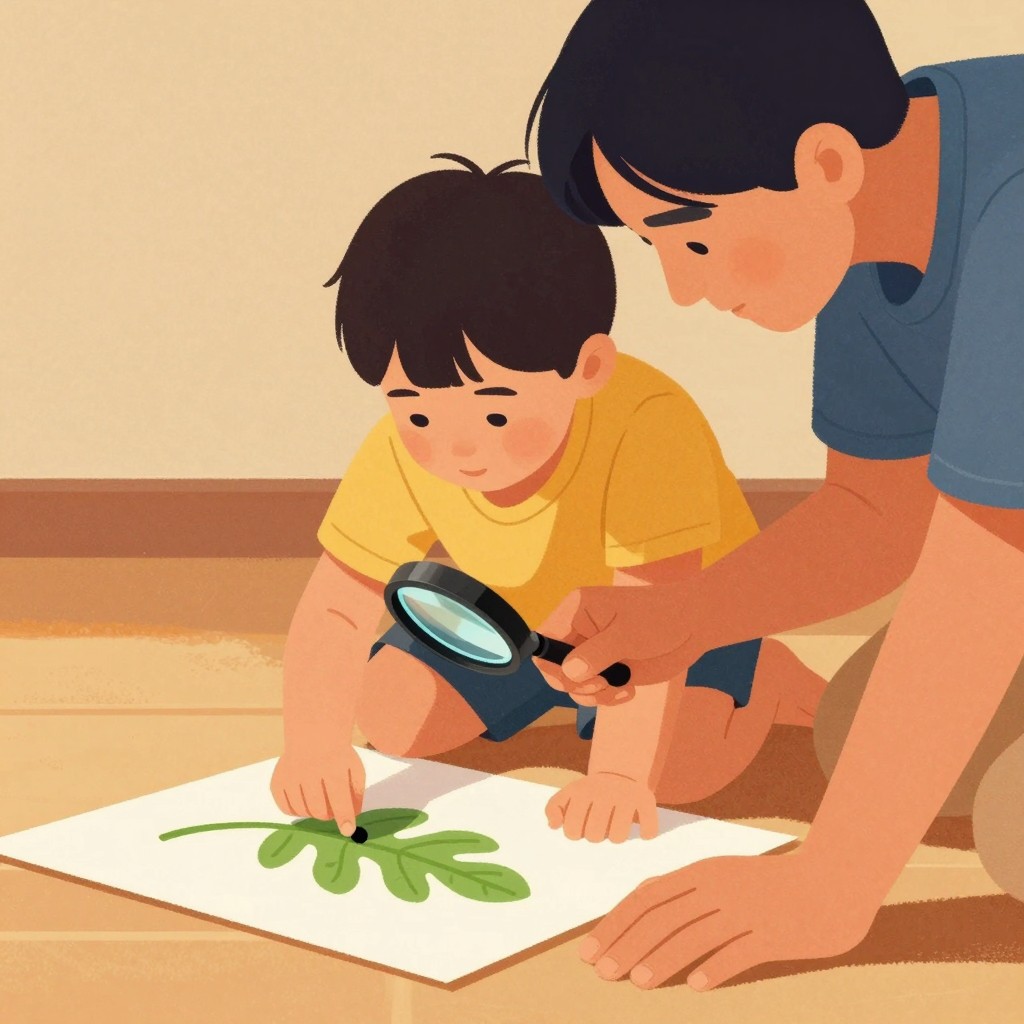
Iris: Last time, “Everyday Science at Home,” turn routines into inquiry moments that build logical thinking and problem solving. Today, picture wet shoes by the door and a child bursting with observations. Jonah: Right, and instead of losing that moment to the snack scramble, we give it a tiny, repeatable landing place. Iris: Our favorite is a five-minute look-and-draw after outdoor play. The research-based principle is simple: children learn science through repeated chances to observe, compare, ask questions, share ideas, and record what they notice. At four, many children can talk about part of their day and hold a crayon between their fingers and thumb, so this routine fits what they are already practicing. Jonah: Okay, give me the exact version. I have a tired four-year-old, a backpack, maybe a muddy leaf, and approximately six minutes before somebody needs a snack. Iris: Perfect conditions. Sit down together, put the leaf, rock, feather, or whatever you found on the table, and say: “Tell me three things you notice. Can you draw them?” Jonah: And if they say, “It’s green,” and then draw one enthusiastic scribble? Iris: That counts. You can extend it gently: “Where is it green?” Or, “Does it feel smooth or bumpy?” Description comes before correction. You are building the habit of looking closely, not grading the picture. Jonah: I might say, “I see a pointy edge. I wonder if you see one too.” Then, if they want, “Should we put it next to this other leaf and see what is different?” Iris: Exactly. Comparison is a core scientific move. You can also try a very small experiment: “Which leaf will move farther if we blow on it?” Then pause for their prediction. The evidence supports regular opportunities like these, though we should be clear, one five-minute ritual is not a magic dose. Its value is in repetition. Jonah: So, tiny and often. Not a Pinterest laboratory. Iris: Precisely. And the same logic applies to family structure. Predictability gives children a stable frame for exploring. Consistent routines, clear directions, positive communication, and follow-through are central recommendations for preschoolers. Jonah: This is where science talk meets bedtime reality. Say your child wants one more game after you have said it is pajamas time. Try: “You can walk to the bathroom, or I can help your body get there. The choice is yours.” Then, uh, actually follow through. Iris: Calmly. The choice is real, but it is limited. If they protest, you can say, “You’re disappointed. It’s hard to stop playing. Pajamas are still next.” Warmth and limits can coexist. Jonah: No debate tournament at 7:42 p.m. Iris: Exactly. A predictable day, with play, meals, quiet time, connection, and a calming bedtime routine, reduces the number of decisions everyone has to negotiate from scratch. Jonah: Today’s takeaway: after outside time, do five minutes of look-and-draw. “Tell me three things you notice. Can you draw them?” And when a limit arrives, be kind, be clear, and let the choice end. Iris: Small routines, repeated calmly, can do a great deal. Jonah: We’ll see you next time.