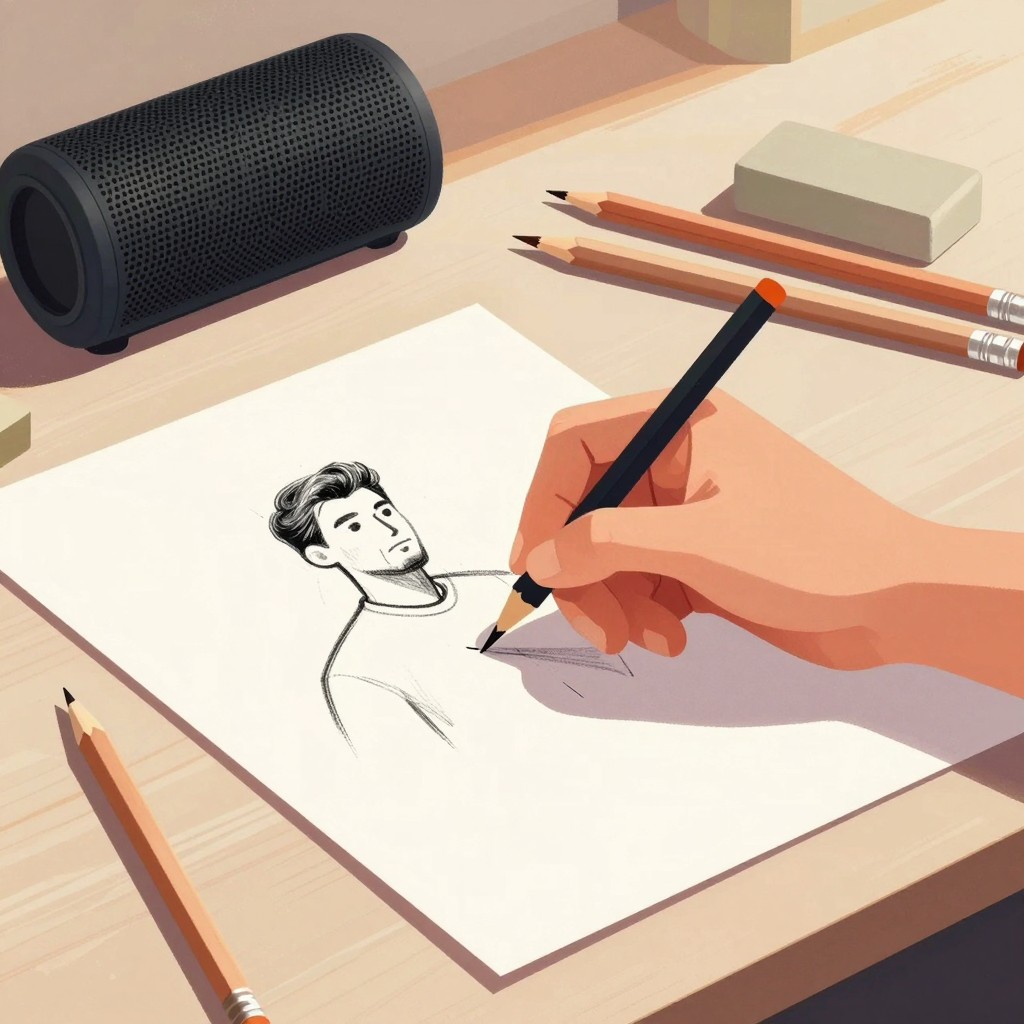
Drawing Podcasts for Beginners
Drawing podcasts are a simple way to bring practice into your day — whether you want compact technique drills, sensory guidance, or a friendly nudge to keep sketching. Audio lets you focus on mark-making without screens or long reads.
NextListen turns topics like drawing techniques and art practice into multi-episode shows with two real-sounding hosts. Pick a course, upload a reference PDF, or get a personalized series made in about two minutes.
- Free to try
- Ready in ~2 minutes
- Personalized to you
Start listening
 2 EP
2 EP 2 EP
2 EP 2 EP
2 EPInside “Bonsai, Close-Up”
- Roots, Cuts, and First Shapes2 min
Learn the pruning, wiring, and repot basics to start a lasting bonsai.
- Refinement: Foliage, Roots, and Style2 min
Advanced moves—defoliation, nebari, tanuki and design principles to refine your tree.
Why listen while you draw
Audio gives you hands-free instruction: descriptions of gesture, timing cues, and prompts to look, pause, and try. For beginners and hobbyists, short episodes reduce friction — you can do a five-minute warm-up, then get back to your page without stopping the flow.
Real micro-courses you can play today
NextListen hosts short, focused shows made for practice. Examples on the platform include Bonsai, Close-Up (two sensory lessons about shaping a tiny masterpiece), Harmonic Patterns: Spot & Verify (technique-focused, evidence-based episodes), and First Customer, First Step (practical, experiment-led guidance). Each arrives as a two-episode set you can listen to while sketching.
Make your own drawing podcast in minutes
Choose a topic (gesture, shading, proportion), upload a PDF reference or notes, and get a binge-able, multi-episode course with two conversational hosts tailored to your level. No app install, free to try — shows are generated in about two minutes and can be personalized with practice prompts, pacing, and even bedtime-story-style imaginative exercises for creative warm-ups.
A taste of the audio
From “Roots, Cuts, and First Shapes”:
There is a particular hush in a nursery aisle when the potting mix is damp. The air smells dark and mineral, and your fingers, almost without thinking, trace the rough bark of a small tree. You can feel it, can’t you? A whole landscape, waiting close-up.
Today, we’re beginning its first shape, with roots, cuts, and a little wire.
When you repot, start beneath the soil. Root pruning helps build a balanced nebari, that lovely flare of surface roots that makes a bonsai feel settled and visually stable. Tease the roots outward, then trim the thick roots growing straight down, and any roots circling the pot. You can remove up to 20 to 30 percent of the root mass to encourage fresh feeder roots. Then settle the tree into fresh, well-draining soil, and water thoroughly. This is not just tidying, um, it is giving the tree a new foundation.
Now look up into the branches.
In late winter or early spring, make your major structural cuts. Use a concave cutter for larger branches, choosing the ones that clarify the tree’s framework. Pause before each cut. Ask, does this branch help the story of the trunk, or crowd it? Never remove more than one-third of the foliage at once. And on deciduous trees, protect wounds larger than a pencil diameter with cut paste.
Then, wire. Wind it along a branch at about a 45-degree angle, snug but not crushing the bark. With gentle pressure, bend and position the branch for movement and balance. A small turn can make a tree feel as though it has spent years leaning toward light.
Questions, answered
Can audio teach drawing techniques without visuals?
Yes — good audio uses precise verbal cues, timing, and sensory language to guide hands-on practice; it’s best for exercises, observation prompts, and step-by-step drills you can follow while drawing.
How long are typical episodes?
Episodes are short by design — often five to ten minutes — so you can complete a focused exercise during a single listen and return to drawing immediately.
Can I turn my sketch notes or a PDF into a podcast?
Yes. Upload a PDF or notes and NextListen will generate a tailored audio course based on that material, with two natural-sounding hosts and practice prompts.
Do I need to install an app to try it?
No. NextListen is free to try and works without installing an app; shows are created and playable in about two minutes.
Want this made just for you?
Tell NextListen exactly what you’re curious about — the angle, the depth, even the vibe of the hosts — and it builds your show while you pour a coffee.